Thursday, November 4, 2010

Taking off my blinders


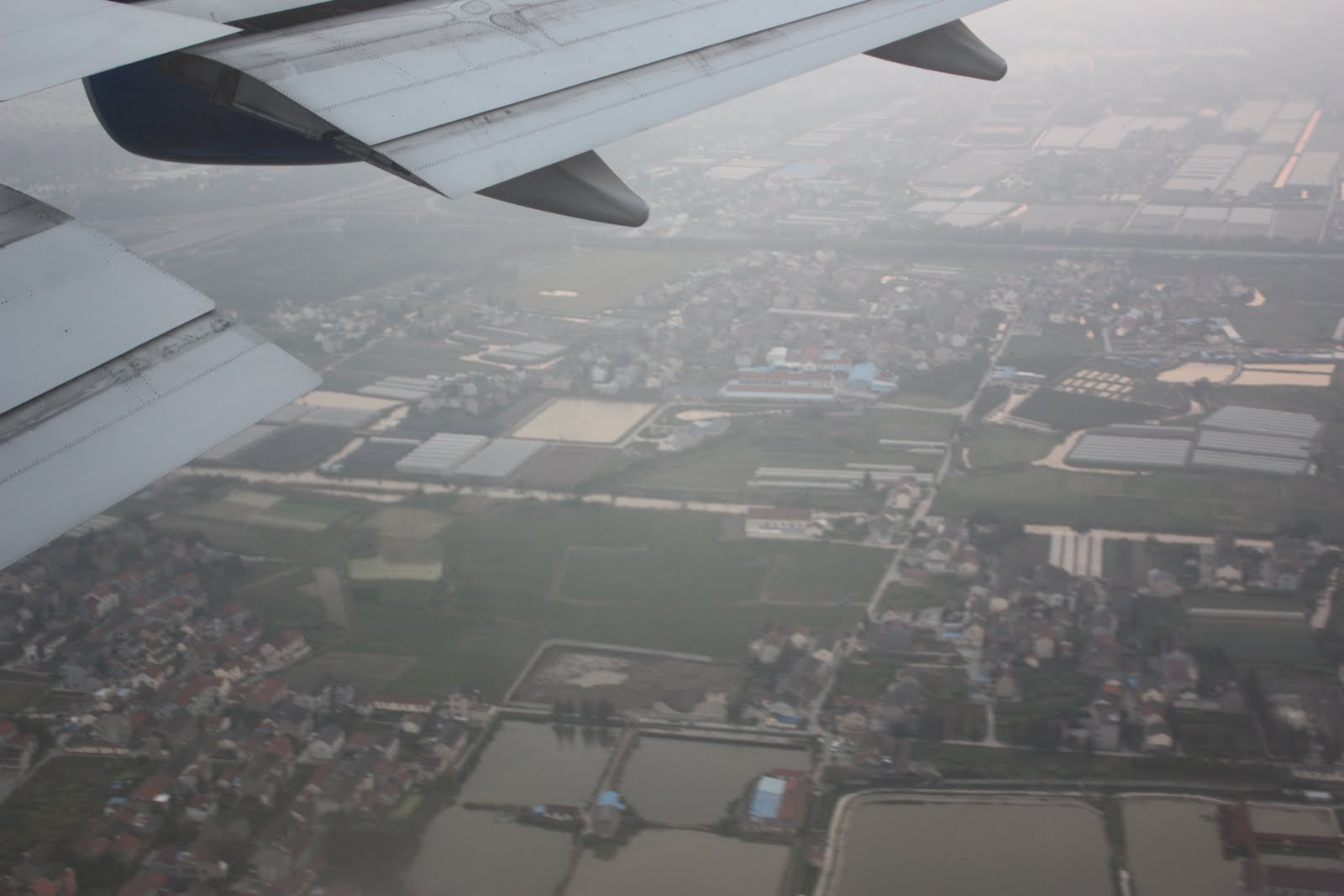
I feel like I have a good balance with the amount of travel I do for my job. A couple of weeks ago I spent a few days in Cambodia and also in China. I visit factories to review their working conditions. I love this aspect of what I do because I feel like I get an insight into another part of a country that I would not see if I were only traveling as a tourist.
These workers in these factories are often considered the working poor, these jobs often pay just the minimum wage, or unfortunately often below minium wage and have long hours. Factory work is really hard and mundane and yet these people are the core of the global manufacturing industry which in turn produces all of the things we get to buy.
I find when I am in Asia I see the world a little differently than when I am at home. This is because culturally we are different and it gets magnified when you have a country that thinks slightly different about some things. And yet there are some things where we are all the same.
You get anyone talking about their friends or family people react the same - they all have eclectic stories, or when you see a child and smile at them, they smile back. And globally we think we can continue to develop and grow forever.
My role is to look at sustainability - how we can learn to live on this finite planet. I live in a country of 350million people and to find balance here is very tricky. But what happens when you have a country of 1.3 billion people who are trying to bring themselves out of a developing country lifestyle - how do you incorporate sustainability.
It feels overwhelming when you drive for hours and see nothing but sky rises and sky rises - knowing that people live and work here. And that they have a right to live and work there.
I am a big supporter of not throwing rocks while living in my glass house, so I don't want to focus on what China is or isn't. But rather focus on what this means for us. The idea of infinite of resources does not exist - and we are seeing that with increasing prices of global commodities. So how are we going to protect ourselves as the storm grows with a global sustainability crisis. The urgency grows when I leave the nice confines of grocery stores, heat and plumbing and see that the rest of the world lives very differently than we do. We have a lot father to fall.

Sunday, October 3, 2010

Wall Street and Sustainability

So it isn't any surprise to any of you who are interested in sustainability to know that the objectives of corporations and wall street don't usually include environmental and social unless it benefits the bottom line.
Avoiding risk is an easy sell for either, reducing costs helps on the environmental front and improving workplace moral and security benefits productivity. Social and environmental are almost always linked into their financial siblings success.

The interesting part about this is that we are chasing our tails and are too disconnected from our impacts to truly understand how we can manage environmental and social to our benefits.
Chasing our tail because there is a desire to make the company financially stable and then help the planet and its occupants, but then we are hurting before helping and growing in a way that builds bad habits. And we know all habits are hard to break.
Disconnected because we have no control when environmental destruction floods out the crops we rely on to make our products, or when poverty becomes too much and disease prevents workers getting to work, thus losing our delivered on time products.
Despite the world becoming so ever intertwined we have also become so fragmented into different cogs of different wheels.
Big companies are starting to invest themselves all the way through their supply chains to avert risks, and when they get down to the parts they never imagined many are having to adress the social and environmental ills they caused head on. Be it cleaning up local drinking water, providing education or health care.

While we see providing social and environmental benefits as a cost here in America, it will come full circle and bite us in the ass if we don't and it will be a lot costlier when we do. but for now the eye is on the financial gain, so we will continue to weave our social and environmental endeavors into this web. In some ways this is the easy way out, accounting is simple. Environmental destruction is a hard one to measure and when it comes to justice, everyone has an option on what is fair for the social good.
This is where it is going to get interesting - this is where leadership lies.

Sunday, September 12, 2010

The right to be in business


OK so who gets the right to be in business and stay in business.
If you are to look at the way things are right now. I would say ANYONE can be in business - you just register and then off to the races. Now who has the right to stay in business. Well one could argue that those who are successful have the right.
OK...
I am not going to pick on any real companies today for my example. Let's pretend I have a business (I just made some cupcakes for a neighborhood barbq, so let's use them as an example) My cupcake business is SO popular ;) I make lots of money and get lots of press, I have celebrity endorsements, and I am publicly traded.
But let's say that in order to be in business I use ingredients that caused environmental pollution in their growing. That the farmers making my ingredients were not paid a minimum wage and did not work in completely safe working environments. Let's say that it was just too expensive to do these things, but hey my business was popular and kept many people here employed.

This is a question I wrestle with often. In my line of work I know too much about what companies to to offer customers cheap or even not cheap products. There are corners cut all over the place and they are the corners that we are comfortable with because in my case I want a $1 cupcake. At what point are we as consumers going to demand better, demand more from companies. And say this isn't right?

Cool options are starting to find their way to the markets, but now it is up to consumers to by organic over conventional, to buy FairTrade, to buy the non toxic version over the conventional. If the demand isn't there, then we are at a loss.

Companies who do not know their impacts and do not make strides to improve their environmental and social impacts - don't have the right to remain in business for long.

Sunday, September 5, 2010

I am so busy I am bored


I look around me and have noticed how incredibly busy people say they are. The idea of busy is interesting to me because it gets wrapped up with the idea of importance.
Busy people are important, they have tasked to do, they have deadlines to meet, they are essential in the success of the business, or in their personal life. We have to look at this because I think the idea of busy relates directly to sustainability. And slowing our selves down is a correction in the path from an unsustainable life to a sustainable one.
Why are we busy? Expectations, interests, keeping up with the Jones, the need to get ahead, the need for coveting more... there is always more to do, more to say, more to experience. This is life.
Our minds have decided that being busy is a life style we want or... we HAVE to have.
When we are so busy we have to make priorities, of course my boss comes before me, of course my kids come before my partner, of course X comes before Y. This is the nature of trying to do everything all at once.
If we choose to do somethings quickly we have to take short cuts, and those short cuts have impacts, not only on us, but on the world. My short cut might be to buy pre-made foods, or order take out, or not exercise, or not be a part of my community, or not read about issues, or engage with people. The list goes on and we notice OH I have a little more time, so we add more things to our list and become even busier.
Another thing I notice about the idea of busy is that I am not used to the feeling of busy. So busy that I do not understand what to do with myself or my mind when I don't have something I need to do. SO I start to make up projects, fill in time, go shopping, all sorts of things. And soon I become bored. Because this busy, this filling in all sense of quiet with consumption of things and duty has me locked into a feeling that I cannot escape.
Who I am I and what value am I if I have not output something today?
I have to answer this question because the busier I become the less useful I am. And I need to remain grounded if I am going to step out of the race and look for some kind of alternative....
I'll get to that, but in the meantime - like my plants I planted?

Thursday, June 24, 2010

The pain of change


Interestingly businesses now and days do a great job of hiding the efforts behind the scenes of creating new products, new solutions, new ideas. By the time the customer interacts with it, the customer experience is made to be perfect. I think this has greatly skewed our expectations in our world today.
I buy a fancy new phone and now I can search the web, map where I am, find a cafe near by, take pictures, edit videos, etc. And when there is a dropped call I am gravely disappointed. Or if I purchase a shirt and after 10 washes it gets a hole - how could this happen? We have done such a good job of customer service and innovation and marketing that in all reality we live in a false world. Our expectations that anything can be done are incredibly high.
One side of me completely agrees (I am an optimist), the other side...
What impact will this level of expectations have on moving our world toward sustainability?
For instance, I am involved in a project currently where we want to change a regular behavior in our business to reduce our environmental impact. The first expectation was... "well can't we just change it and be done with it?" 6 months later we find that around ever corner is another set of questions and impacts that we had not thought of from the beginning. It will easily take us easily another 6 months to get this project off the ground. And when it eventually does happen, it will be talked about by our marketing and sales departments like it was an easy switch and we "just did it".
What gets lost here is the countless hours, conversations and testing to see if we can in fact make a sustainable change. I think if we lowered expectations so that they were more in line with the truth, we would see something remarkable happen. People wouldn't think of things in abstract, they would understand the steps it take. I invite all of you who were interested in making a change, but feared the time and effort - know that there is no other way. And what you will gain by going through the process is far greater than anything you can buy off the shelf.

Friday, May 21, 2010

What does it take to be heard?

My boyfriend has a great quote - "it's not what you say... it is what people hear." And I can't tell you how many times I have said, and have heard others say, "well I told him/her that why didn't they do it?"

We make an interesting assumption that every time we say something, that the listener understands what we say with the exact same clarity as we understand what we say. Not true. next time watch a conversation and watch how many times something has to get repeated, watch how one person tends to repeat things back to make sure they understand. Understanding comes from experience, it comes from connecting information to your perspective of the world.

Ok so what does this have to do with sustainability? The other day I was with my boyfriend listening to a program on the radio and the interviewee talked about sustainability in relation to marketing trends. Side note: My boyfriend is in sales and marketing. he repeated back to me concepts about sustainability that I have been telling him for years, like they were brand new ideas? I scratched my head... "Haven't you been listening to me?"
His response is incredibly important for people to take note of. he said "Yeah, but you have never said it like he did. You need to use those words."

This to me was a great eye opener on how we must communicate for understanding in order to be heard. Keep trying, keep using different words and messaging, and eventually ideas might find a connection to each of our listeners.

Saturday, May 15, 2010

Waste

I just cleaned out my garden to harvest what I had, remove what was old and make room for my summer "crops". I have to admit there was an excessive amount of "waste" I think the ratio was 1/4 = food, 3/4 = went to the compost. Now often we reference nature as having NO waste. And how inefficient I would be if this were my business. If I were tossing out 75% of my investments, I wouldn't be in business for too long.
But there is a different story here. This organic waste isn't going just anywhere, it is going into a compost that will be broken down into new soil for future gardens and thus supporting future plants. Really I have to take a very long term approach to how I look at my garden and thus giving me better examples of how to look at how I would build on the nature model for my business. Everything we don't use, we should use at some point. And this is probably the strategy behind hoarders. Keep it, for it might be useful at some point.
This is different, keep it because you KNOW HOW it will be useful at some point. But knowing that means you have to have a pretty in-depth understanding of what your needs will be in the future. And that is not easy. If you look at the market economy to day and compare it to the needs of 10 years ago, there have been many changes. But there have also been many similarities.
This is where you can at least plan for. Humans will need to eat, to sleep, to shelter themselves, we are addicted to culture, so if your waste can feed those needs then it serves a purpose. Even if that purpose is not short term.