Friday, March 11, 2011

Guest blog - Sustainability from your not so Average Joe

There are three (at least) reasons why I should not write about sustainability for this blog: 1) I really don’t know a lot about the topic. 2) I don’t exactly live an exemplary life when it comes to sustainable practices. 3) Even if I did have any insights, they likely wouldn’t apply to the population at large, because I live in a very remote and unique environment – the Canadian Arctic.
Nicole, however, won’t take no for an answer, and so here we are. I think, in her wisdom (?) she might think that I might have something relevant to say for the very reasons I think I don’t. So I’m going to tackle this piece from that perspective, then, and see what happens.


1. What do I know about living sustainability? Putting it simply, I would say it is about doing what you can. Not talking or thinking or wishing or regretting. But DOING. It is easy think of endless excuses why we cannot do X.  So perhaps the key is to start by focusing on doing Y…the things we can do. For example, where I live there is no recycling program and no organic options at our grocery store. I can’t do anything about it.  However, I can (and did) make the decision to be a single-vehicle family.  With two young children to cart around and a climate that involves 6 months of winter and temperatures that regularly drop below -30 and -40 degrees Celsius, it would obviously be more convenient for my husband and I to each have a vehicle, but we make it work with one. There is something we did.
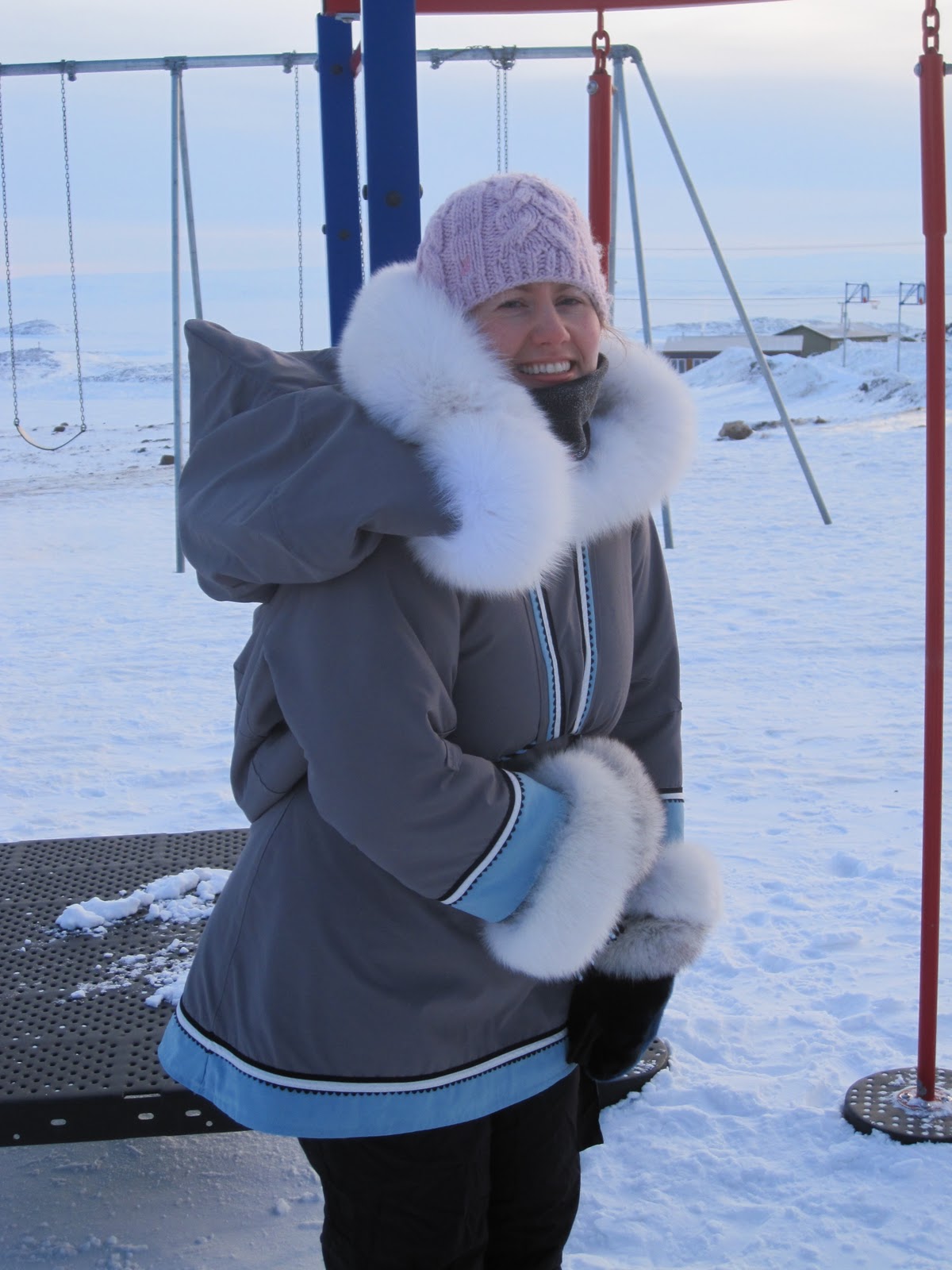
2. Like I said above – I don’t recycle. And OK, so we only have one vehicle, but that one vehicle idles a lot (to keep warm in the aforementioned formidable climate). And sometimes I let the water run when brushing my teeth. We use disposable diapers (gasp!) I could go on. So why would Nicole want a baddie like me telling y’all about my thoughts on sustainability? I guess maybe because I’m an Average Joe. Nicole has a Masters in Environmental Studies and sustainability is her passion. That’s not me. I’m a librarian and right now just getting through life with a toddler and an infant is my passion. So sometimes it feels like maybe the same rules wouldn’t apply to an Average Joe that would apply to a keener like Nicole. But if you take a few minutes to actually think about sustainable living (as I’ve been forced to do by going through this exercise) and go back to my simple definition, then even the Average Joe can do something. Or even better, a bunch of somethings. And the somethings can be easy (how hard is it to shut the water off when brushing your teeth?) And the somethings can have spin-off benefits (e.g. having one vehicle also means spending less money). And probably, the more somethings you do, even more positive choices will follow as you begin to be more conscious about sustainability.  And we don’t need a Masters in Environmental Studies for that. (And FYI, if you ever want to make something a habit, enlist the help of a toddler…those little guys are militant about habits. Are you lazy about turning off lights before you leave a room? Just get my son to help you flip off the light switch one time, and I guarantee you’ll have a little light-turning-off enforcer for life.)

3. I’ve already mentioned just a couple of points about Arctic living that are not likely to be issues for the general readership. Even though I face some challenges up here, I’ve got some pretty amazing models from the Inuit culture, who managed to perfect sustainable living in the most cruel of environments. There are many, many more unique elements to my lifestyle (truly, I wish more people could visit up here and experience the wonders of the north). For example, when I take my kids for a “walk” at this time of year, one of them rides on my back in my amautiq and the other is pulled in a sled.  I think Nicole sees these anecdotes as a bit of a hook, because my experiences up here are so unique and tend to garner interest. But even if your life isn’t as glamorous or interesting as that of a northerner, I guess you can still go back to my simple definition of sustainable living and do what works wherever you happen to be, regardless of the challenges you face there.

Rae-Lynne Patterson Aramburo lives in Iqaluit, Nunavut in Northern Canada with her husband and two boys.  She graciously responded to my request to write a blog about living in the north and thinking about sustainability.  And I was right she has some great insights to share.  Thank you Rae.

Wednesday, March 9, 2011

Preconceived notions on sustainability

Have you ever run into a situation where the person already knows everything about what you are talking about.  Doesn't allow for much of a discussion does it?  When the mind is closed there are not a lot of opportunities, but if you don't know then the opportunities are endless.

This has been my experience the past couple of months as I talk to companies about integrating sustainability into their business. There is this strange resistance to the subject.  Which I just don't understand as the business case for sustainability is really just about surveying your operations - its impacts, risk and opportunities.  Additionally this results in higher employee retention and engagement which has a dramatic affect on your bottom line.

So why the resistance?  Some theories I have heard is that there was such an environmental activism approach to getting companies to consider the environment that there is just a built in mental push back on ANYTHING green.  Another idea is that companies to day have a lot going on to catch up with IT, design, social networking arenas, that to add the ideas of sustainability feel too much.

So it has been interesting to open up the closed minds to the subject of sustainability - what it means and how it can benefit their companies and them as people.  Around every corner there is more to learn.  I shouldn't be surprised by this, but my mind needs to open too. 

Friday, March 4, 2011

Share a little B-Love

B can stand for a lot of things - some important to me? Bassett, Beer, Business, Duke Basketball (I just threw that one in there for my boyfriend) and today's B goes to Benefit.

I have been thinking a lot about how structure dictates behaviour and if a company's structure dictates its behavior - what would it look like if that were changed.  I imagine this is a similar question that the folks at B Corporation thought about and then did something around.  In their case B stands for Benefit Corporation where their Declaration of independence says it all:


We envision a new sector of the economy

which harnesses the power of private enterprise to create public benefit.


This sector is comprised of a new type of corporation the B Corporation

which is purpose-driven and creates benefit for all stakeholders, not just shareholders.


As members of this emerging sector and as entrepreneurs and investors in B Corporations,


We hold these truths to be self-evident:


- That we must be the change we seek in the world.


- That all business ought to be conducted as if people and place mattered.


- That, through their products, practices, and profits, businesses should aspire to do no harm and benefit all.


- To do so requires that we act with the understanding that we are each dependent upon another 

and thus responsible for each other and future generations.


While B Corporation didn't start certifying companies until 2007 they already have 381 companies covering 54 different industries.  As social and environmental responsibility starts to percolate deeper into the various aspects of business companies are going to step it up to authenticate their values.  Being certified will be important to build that trust with the investment and customer communities. Keep thinking of all of these initiatives as a part of a building momentum to moving our mainstream business climate in the direction of embodying social and environmental factors for all of our survival. 

Wednesday, February 23, 2011

Request for personal values

I had a great request from my friend Diane about how does one determine their personal values.  This comes from my blog post about determining your company's values.
Personal values are a funny thing, you know you have them, they guide your life, your decisions and yet it is often very difficult for us to articulate them.

I am going to reference a great thinker on this subject Peter Senge who wrote the book The Fifth Discipline about learning organizations.  I am not an expert in values or determining values, so I wanted to give all credit to Mr. Senge, Richard Ross, Bryan Smith, Charlotte Roberts, and Art Kleiner who then produced the book The Fifth Discipline Fieldbook that has exercises to their theories.

Let's get started. (This is your cue to grab a pen and paper and get thinking)
OK not to leave anything on the table - first what are examples of values anyways?
Luckily there is this fabulous thing called the internet and you can do a search for "values".  But just incase you want to go straight for the work.  Check out this link from values.com. It list a number of values, this will give you a good idea what are values, and notice which values you gravitate towards.

This next process is taken from Charlotte Roberts and the Fifth Discipline Fieldbook
1. Write down 10 values that you feel strongly about.  You will be surprised where some of these values come from - you grew up with them , or they are the values of people that you respect, or they are something that you developed over your life.

2. The next step is to narrow down these values - this is something important in the business setting because the number of values focuses the company to invest well into a few.  As a person you can have more, but try the exercise and see what the process of narrowing is like.  For example which of these values you have chosen resonate more than others.  Maybe just prioritize them?

3. Another step you might find interesting is articulating your values. Answer these questions with the values you have listed (maybe your top three).
What does that value mean exactly?
How would your life be different if those values were front and center and you lived them?
What would the trade offs be if you were to go against that value?

Give this a try - see if you find the process interesting and helpful to gain more out of living your aligned life? 

Friday, February 18, 2011

Once you know, why do we convince ourselves otherwise?

I have gone back and been reading my old sustainability books.  The Ecology of Commerce by Paul Hawken, Confessions of a Radical Industrialist by Ray Anderson, and others.  And I read their observations on our impacts of business and human existence on the planet and am shocked by what we are doing.
But I have read these books before, I knew these impacts years ago, why does it keep shocking me?  I think in part because of the life I live I am quite removed from the visual impact of 2,562 tons of solid waste in a year from one company.  There are thousands of companies across the world, of course of various sizes, but we don't see all of the numbers added up together in daily life.

So while I know that driving my car, using water, gas, and creating waste are things I do on a small scale every day - what if I were to see this as a sum?  All totalled up would I see my impact differently and make the needed changes?
I think this would help dramatically - as I don't think it is a big deal to use my little Toyota Matrix every day for trips under 20 miles.  Heck it isn't like I am commuting 60 miles in an SUV?  But that there is the piece we have to be wary of, we can justify ourselves of anything.  And guess what - my lifestyle, my consumption, the waste I generate all have a place in that adding up of the world's impact.

What activists are trying to get at, is for ALL of us to think about the details of our impacts and make improvements.  It isn't about doing less so others can do more... it is about taking that responsibility and saying my life is adding to a really big number of global impacts and what can I do to lessen that.

Friday, February 11, 2011

Why we do it


I have started working on a white paper to articulate my vision for my work and sustainability and realized that I needed to define where I start from.  It is important to know WHY I am doing what I am doing.  WHAT I do really comes from the elements of my life and the time that I live in right now.  We have globalization, computers, blogs, fears, pollutions, community gardens and multi-national corporations. 
The world we live in today is unique and never before.  So what I do is only influenced by my passions and visions - the why....

Let’s start at a place of what is right in the world, let’s start at a place that humans have unlimited potential for happiness, for love, for creativity, and be rooted in our place in this ecosystem of where we live.  We are humans, we are animals, we are living beings and therefore our life is finite.  Yep we get to live and we also get to die, all things in life have this, look at the plants and animals and people around us, it happens every day.  

So with this finite time here, wouldn’t we want to be the greatest that we can?

This is the place that my sustainability vision is rooted.  There are so many best practices that exist out there, we have seen amazing innovations around agriculture, manufacturing, use, service and even consumption.  We have many solutions, why aren’t we putting them into practice?  There are many answers to that question, but where I see opportunity is in the space where people want to live their values through all they do.  We can get there.  What would the world look like if we all lived our values?   I sure as hell wouldn’t have a job trying to bring the principles of sustainability to the masses - and I welcome that day because that would be on amazing world. 

Friday, February 4, 2011

Seeing the forest through the trees - why the short term push is alienating


Just today the LA times reported a decline in the nation's unemployment rate to 9%, but fewer jobs are being added to the market.  The impact of the 2008 recession is still being felt. 

I have noticed this in a different way.  I have had more than a dozen conversations with friends working for various companies in various industries feeling an underlying sense of unease.  Most companies about two years ago asked their employees to start doing their work differently - budgets were cut, jobs were lost, spending stopped, benefits removed, and everyone just had to do more with less.  My family saw job losses.  Many others did as well, so for those who were left were just happy to have any income.  Well supposedly the market has improved, the economy is coming back, retailers are reporting growth in sales.  And yet inside many companies there have been no changes. 

"What is being expected of us and our output is not sustainable." "I see my company making bad decisions for short term growth... we are damaging our brand."  These are just a couple of comments I have heard.  There is a growing trend in many employees that executives at companies need to be tuned into.

There are studies after studies about why people come to work and stay at companies - compensation is only part of it.  Feeling like you are contributing, are valued and respected are high up on the list.  Also in this day and age more and more people are drawn to companies that do more than just make things or sell services.  Everyone one of us has values, we want to align these values with how we live our lives.  

When a company continues to push employees to do more with less, to cut investments, or long term thinking for short term wins,  this cuts into people's values.  The company begins to show its true colors - out for the only the financial bottom line.  This may motivate some, but for those who are passionate, there needs to be more to getting up and clocking in every day. 

I love working for the man when the man is thoughtful in its responsibility to its employees, its community, the planet, the future.  Meeting next quarter's earnings without the thought of the future, the impact of those actions will not motivate your employees to be passionate, to invest themselves in the success of the company.  
It is a tight line of staying in business - but there is more than one approach.  Choose the one where employees are valued, respected and properly resourced to be the best they can be.